Posts

Showing posts with the label culturally responsive pedagogy

How to get students talking & discussing more

Image
Hattie (2012) “teachers need to change to far less talk and much more listening”  Visible Learning for Teachers (p. 80).  “Teachers talk between 70 and 80 percent of class time (p. 80) Student engagement is higher when teachers talk less, this is especially true for at-risk students  Only “5-10 per cent of teacher talk triggers more conversation or dialogue engaging the student” (p. 81)  Research shows that “when highly effective and other teachers were compared, the former had more general class talk and less directive talk” (p. 81) How do we light the fire within students to express their thinking? Dr Aaron Wilson and Jacinta Oldehaver in their research in Talking about Text (TaT) worked to change traditional patterns of teacher dominated talk in the classroom and found that achievement rates in TaT classes were higher than in previous years and also higher than students in non TaT classes because of the changes in teacher talk. They found that ...
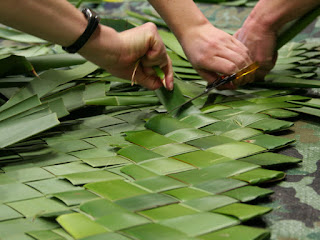
Culturally responsive pedagogy - mahi tahi kotahitanga

Image
Mahi = work kotahitanga = working together ERO: " Mahi tahi (or mahi ngātahi) describes the unity of a group of people working towards a specific goal or on a specific task, often in a hands-on fashion.   In the school context, mahi tahi describes the business of working together collaboratively in the pursuit of learner-centred education goals. ....." At Tamaki College, staff are working together to raise student achievement in NCEA. I am on the Change Committee which meets every few weeks. We are a group of innovative educators who try to find different ways of approaching the challenge. We discuss and work on this sitting around the table eating brain food and then take it back to our respective PLuG groups for the group to share strategies and ways of working that have helped reach the achievement goals for priority students. It seems to be working because the list of priority students has become shorter as students go from no credits (red) to some credits (gree...

Pepeha

This week we focussed on our pepeha . I do have Māori heritage and know my ancestral line but have not been brought up as Māori. I have developed my pepeha using screencastify (see read more)

EC workshop

Image
On the 27th February I was fortunate to be able to attend a workshop run by the Education Council on the "new" standards that have been put out for teachers in schools. Unfortunately, some teachers have brushed this off with "Oh they have just put 12 criteria into 6 standards but really nothing has changed". When you read the standards carefully you notice that there has been a sea change which has already been reflected in the more progressive schools especially those who engaged with assessment for learning , Kia Eke Panuku , and to a lesser extent PB4L . So what has changed? Std1   Waitangi partnership - Practise and develop the use of te reo and tikanga Māori Std2 Professional learning - Critically examine how my own assumptions and beliefs, including cultural beliefs, impact on practice and the achievement of learners. Std3 Professional Relationships - Communicate clear and accurate assessment for learning and achievement for learning Std4 Learning-fo...

Culturally Responsive Pedagogy - Whanaungatanga

Image
Tamaki College has been working with Ngahuia Lott over a period of years and she has been running workshops for us this year. This diagram shows the extent and meaning of what we have been learning. At the beginning of each year we need to build relationships with those we are working with including students. This comes under the heading of whanaungatanga. What is whanaunagatanga? For myself it is developing relationships with each of the teachers I work with. These are mainly beginning teachers who I will be supporting over several years but also in my role as the SCT I work with other teachers who would like support. I am lucky that I have been given time to do this important role and although I am not teaching in the classroom, I have had years of experience teaching in low decile and high decile schools and also with Team Solutions, University ofAuckland. Being able to work in-depth in one school is a privilege as one can work at a deeper level. Each of the beginning teachers...

Pedagogy

Image
In conversation with a beginning teacher recently, the question of pedagogy came up. What is pedagogy? The Oxford dictionary defines pedagogy as"  The method and practice of teaching, especially as an academic subject or theoretical concept." Teaching as inquiry is an important aspect of effective pedagogy The NZ Curriculum defines pedagogy as: " Teacher actions promoting student learning " There is also  culturally responsive pedagogy. Ako  underpins the Practising Teacher Criteria and is an important component of culturally responsive teaching and learning.  A good way to check if you are including effective pedagogy in your lesson plans & units of work is to use these sentence starters. I create a supportive learning environment by........... I encourage reflective thought and action by............. I enhance the relevance of new learning by.............. I facilitate shared learning by.................. I make connections to prior learn...