Posts

Showing posts with the label change

Collaborative sense-making

Image
What is collaborative sense-making? I've come to that part of my appraisal where I need to show evidence of my collaborative sense-making this year. It does sound like more of education jargon but at the same time needs to be investigated in order to get it right. It is one of the 6 components of the appraisal cycle put out by the Education Council. Luckily I went to their workshop this year and this was explained as: How you collaborate with others who have different perspectives from yours eg experts, colleagues, mentors etc through conversation to look at different perspectives on a situation. From these conversations you share findings, learning and implications for changes in practice. An example given was to use another person eg have a conversation with the Te Reo teacher to give you feedback on your work with Standard 1 (Treaty) Questions from ERO include: What do we already know about this? What do we need to find out? How might we do this? Catalysts that lead ...

Portfolios for certification

Image
I have just been re-reading the notes I took at the Education Council (EC) workshop on the new standards at the beginning of this year. Provisionally certificated teachers (PCTs) are always worried about having enough evidence and what to record. I currently mentor 7 PCTs, 3 of whom are coming up for certification this year. What the EC has said is that they do not want voluminous portfolios of stuff and that they want to shift the emphasis from the showing of evidence to improvement of practice done through discussion and documentation. Teachers engaging in “learning talk” analyse, critique and challenge their current teaching practices to find and/or create more effective ways of teaching. ( Annan, Lai & Robinson 2003) The current situation is that ERO will audit the documentation for certification of teachers recently certificated. They are looking to see that the school has a robust system well founded in evidence. They will be looking at the level of support and inducti...

Culturally responsive pedagogy - mahi tahi kotahitanga

Image
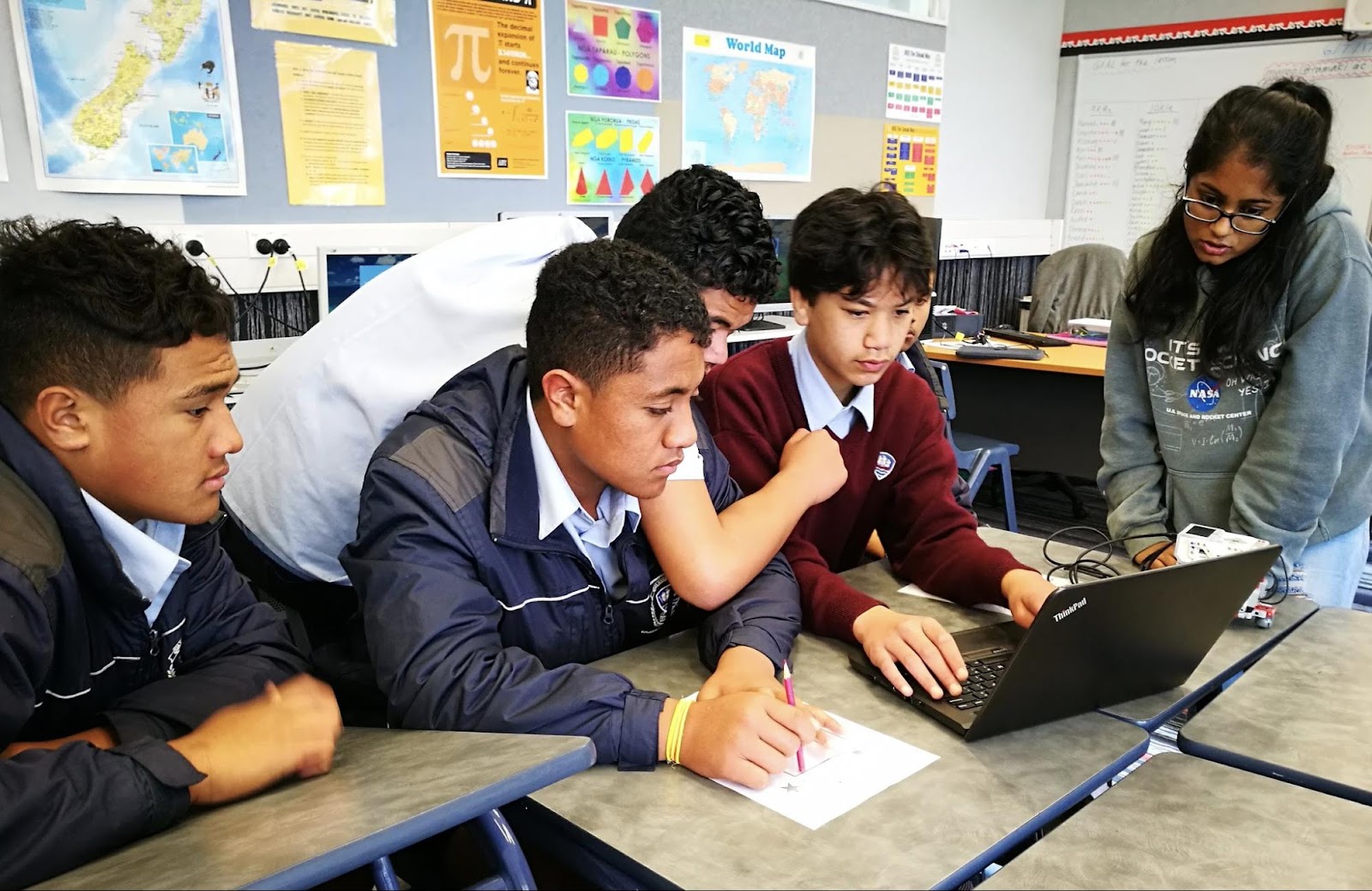
Mahi = work kotahitanga = working together ERO: " Mahi tahi (or mahi ngātahi) describes the unity of a group of people working towards a specific goal or on a specific task, often in a hands-on fashion.   In the school context, mahi tahi describes the business of working together collaboratively in the pursuit of learner-centred education goals. ....." At Tamaki College, staff are working together to raise student achievement in NCEA. I am on the Change Committee which meets every few weeks. We are a group of innovative educators who try to find different ways of approaching the challenge. We discuss and work on this sitting around the table eating brain food and then take it back to our respective PLuG groups for the group to share strategies and ways of working that have helped reach the achievement goals for priority students. It seems to be working because the list of priority students has become shorter as students go from no credits (red) to some credits (gree...

Appraisal

Image
What is appraisal exactly? The Education Review Office is very clear on its purpose of appraisal in schools . Teacher appraisal has two purposes: improvement - appraisal supports personal development and school capability to meet student outcome goals professional accountability - appraisal provides assurances to the wider community that teaching standards are rigorously applied. The Education Council sees it as: The appraisal process exists to affirm and develop a high standard of teaching in New Zealand. Effective appraisal systems using the  Standards for the Teaching Profession  help teachers learn, grow and achieve the best outcomes for our learners. PPTA describes appraisal as : Performance appraisal has two purposes – development and accountability, or to put it another way, formative and summative assessment. It should be about helping teachers to develop their practice and do their personal best Appraisal is a good way of reflecting on your...

Teaching as Inquiry

Image
Teaching as Inquiry is criteria 12 of the Practising Teacher Criteria  which all teachers, including provisionally certificated teachers, need to provide evidence both for appraisal & certification. For this criteria teachers are required to use critical inquiry  to critically examine their own beliefs,  including cultural beliefs, and how they impact on their professional practice and the achievement of ākonga (learners). I found this set of descriptors of good practice for teaching as inquiry in an article "Leading inquiry at teacher level" by Mike Fowler. The inquiry is based on a group of students you teach which could be selected students in one class, a whole class or students from different classes. You look for evidence of what is happening for these student in the classroom by asking these questions: Why are students in my class struggling with....? What are the challenges students are facing in this topic, course? How confident are these students a...

Learners leading learning

Image
For our PCT professional learning yesterday we looked at the reading "Learners in the Driving Seat" by Chris Watkins . Watkins begins the reading with asking the students to point their index finger to the ceiling then to point to who is responsible for their learning. Most will point to the teacher. This is certainly the case with the 11 beginning teachers that I am currently working with ie that they take responsibility for the students' learning but as Watkins points out " research demonstrates that when students are driving the learning it leads to: greater engagement & intrinsic motivation students setting higher challenges students evaluating their own work (self & peer assessment) better problem-solving" He then provides some very good questions to ask (rather than tell) for Before Starting, On the Road, and Journey's end. These equate well to John Hattie's feedback questions "Where am I going?" (Learning Intention/g...