Posts

Showing posts with the label culturally reponsive pedagogy

Know and understand the learner's culture

Image
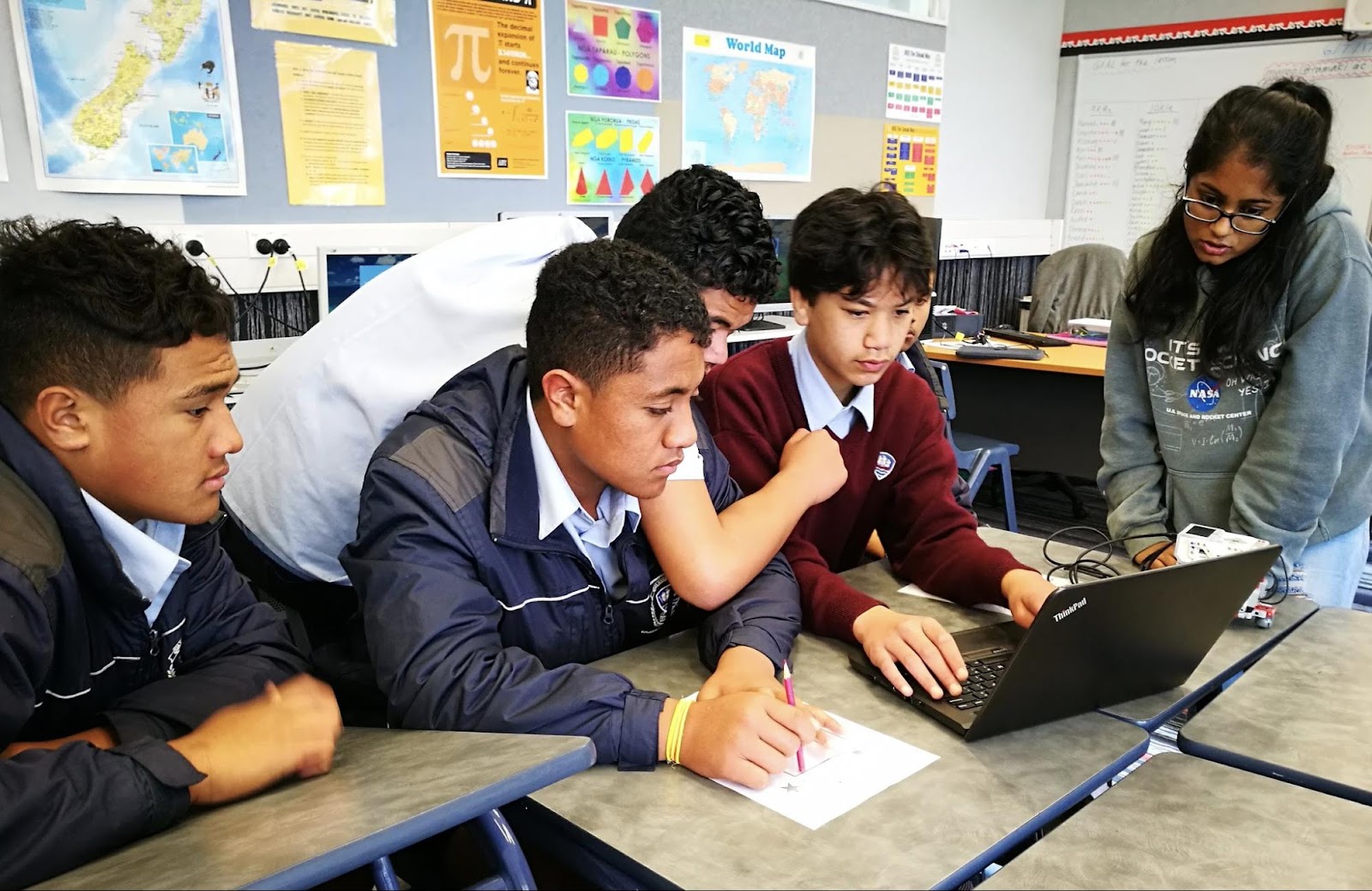
Working in a school that is made up of mainly Pasifika (62%) & Māori  students (33%) means getting to know and understand the Pasifika & Māori cultures that the students have come from and are enveloped in. New teachers to the school, especially non certificated teachers, sometimes have difficulties in getting the students engaged and motivated. This video "Strengthening Relationships" with teachers from  Aorere College, McAuley High School, Mangere Bridge School, Sylvia Park School, Mary MacKillop School and Wymondley Road Primary School  gives helpful advice and strategies on accelerating the learning of Pasifika students. " Where teachers and Pasifika students develop strong relationships with each other , they each gain a more holistic view of the other person as an individual. Teachers who integrate cultural values and socio-cultural norms explicitly into their pedagogy increase levels of trust, acceptance, sharing and mutual support between students....

Portfolios for certification

Image
I have just been re-reading the notes I took at the Education Council (EC) workshop on the new standards at the beginning of this year. Provisionally certificated teachers (PCTs) are always worried about having enough evidence and what to record. I currently mentor 7 PCTs, 3 of whom are coming up for certification this year. What the EC has said is that they do not want voluminous portfolios of stuff and that they want to shift the emphasis from the showing of evidence to improvement of practice done through discussion and documentation. Teachers engaging in “learning talk” analyse, critique and challenge their current teaching practices to find and/or create more effective ways of teaching. ( Annan, Lai & Robinson 2003) The current situation is that ERO will audit the documentation for certification of teachers recently certificated. They are looking to see that the school has a robust system well founded in evidence. They will be looking at the level of support and inducti...

High Expectation Teachers

Image
Ensuring all students achieve success Last Night I attended a lecture by Christine Rubie Davis on High Expectation Teachers. She was talking about her findings from a recent research project. What I took from this talk was that high expectation teachers: use flexible student grouping (according to activity) and a variety of learning experiences. Use assessment information to set goals for each student and support the student to achieve them through high expectations. Students have autonomy over their learning through setting goals and selecting activities to work on – for example with " must-do, can-do” options. It is essential that: expectations for each student are appropriate. teachers provide the scaffolding learners need in order to progress (Vygotsky). the impact of teaching practice on student learning is monitored in an ongoing way. teachers take action to change their practice if it is not having the desired effect. Low ...
Image
Digital Intensive 2 I can't believe that a week has passed since the last digital intensive. Today we were looking at Google Forms, Google Sheets and Google maps. We began this session with the history of Manaiakalani around Learning and the pedagogy of "Learn, Create, Share". Research underpinning this came from John Hattie's constructivist and metacognitive approach, Russell Bishop's culturally responsive pedagogy, the global study for the Ministry of Education that showed acceleration can be achieved through inquiry driven exploration and the use of the Google platform. We learned how to set up a Google form with many available options that would give us data that we can analyse either as baseline data, feedback data or exit data. I created a Google form with questions around the new Education Council standards and sent it out to 10 teachers - have had 3 responses so will send again. I had recently attended a workshop on these and will be using th...

Te Rawhiti Marae

Image
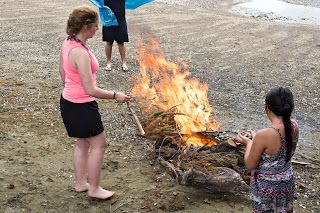
I was fortunate to be asked to go on the the 4 day trip to Rawhiti Marae in November. I went with about 20 Māori students from Kata O'Donnell's tutor class and 3 other teachers. The purpose of the trip was to familiarise the students with Māori tikanga in a remote settlement on Māori land which is quite different from what they are accustomed to. Activities were run by WaiNot Tourism and featured a forest walk, snorkelling, fishing with nets, cooking pippis on the beach, swimming and jet ski riding. The students were kept busy from 7.45am until about 10pm at night. It was a great way for them to bond together well away from school and to have new experiences learning new skills. What did I learn from This? I learned more about ways of working with Māori students,the importance of tikanga, eating, sleeping and working together. It was fascinating to be in such a remote untouched environment and to see how the students behaved and related differently fro...

SOLO

Image
A colleague & I did some research some years back by analysing examiners' comments on NCEA subjects.  We focussed on why students fail in NCEA? and How students get to Excellence in NCEA. We had a hunch that failure was to do with literacy - subject vocabulary, subject reading materials and subject writing requirements. We also had a hunch that from our experiences with classroom teaching, NCEA marking and working with teachers, that students attain Excellence or Scholarship through demonstrating the quality of their thinking and especially using the Extended Abstract category of the SOLO taxonomy. Analysis of the examiners' reports proved that our hunches were correct. 2016 examiner's reports can be seen here . The examiners descriptively list what students commonly did to be awarded Achieved, Not Achieved, Merit and Excellence. These lists are very helpful, especially for Beginning Teachers and the findings within the lists concur with our hunches of 8 years ago....

Teaching as Inquiry

Image
Teaching as Inquiry is criteria 12 of the Practising Teacher Criteria  which all teachers, including provisionally certificated teachers, need to provide evidence both for appraisal & certification. For this criteria teachers are required to use critical inquiry  to critically examine their own beliefs,  including cultural beliefs, and how they impact on their professional practice and the achievement of ākonga (learners). I found this set of descriptors of good practice for teaching as inquiry in an article "Leading inquiry at teacher level" by Mike Fowler. The inquiry is based on a group of students you teach which could be selected students in one class, a whole class or students from different classes. You look for evidence of what is happening for these student in the classroom by asking these questions: Why are students in my class struggling with....? What are the challenges students are facing in this topic, course? How confident are these students a...

Motivating Pasifika Learners

Image
At our PCT meeting yesterday the PCTs shared which students they were focussing on for their inquiry into lifting individual student achievement - a focus for the Professional Learning groups (PLuGS) and what they thought needed to be addressed for these students. The needs discussed were motivation x 3, non completion, disengaged, easily distracted. I decided to do some reading around motivation with Pasifika Learners. ERO in its 2012 report " Improving Education Outcomes for Pasifika Learner s "  saw the key elements as: Identity, Language & Culture - different needs for different learners Assessment information - understanding and using data to make a difference An effective connection between home and school A curriculum that has meaning for students and connects with their wider lives The last bullet point refers to using a culturally  responsive pedagogy.  (see video) What is a culturally responsive pedagogy? It is about knowing your Pasifika stu...