Posts

Showing posts with the label motivation

Assessment & NCEA

Image
There has been much talk about reviewing NCEA . NCEA was implemented in the 2002-2004 and has been changed, upgraded and the like over time to make it more equitable. But NCEA is a qualification based on given standards not a true reflection of a students' strengths and capabilities. NCEA is supposedly an assessment of what students can do. But we know that there are students that do amazing things outside of NCEA but these abilities do not count. Unfortunately NCEA has led to some degree to over-assessment, credit counting (if it doesn't give me credits, it doesn't count) and extraordinary pressure on schools, teachers and students. NZAI was set up this year to look at quality assessment across the education system. Schools came together in seminars across NZ to look at positive ways of assessing student progress. Avonside Girls' High School suggested integrating learning across multiple standards to minimise the NCEA effect using connected learning across m...

How to get students talking & discussing more

Image
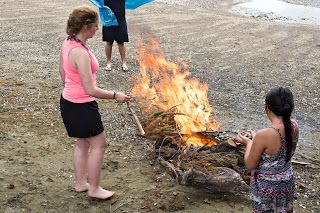
Hattie (2012) “teachers need to change to far less talk and much more listening”  Visible Learning for Teachers (p. 80).  “Teachers talk between 70 and 80 percent of class time (p. 80) Student engagement is higher when teachers talk less, this is especially true for at-risk students  Only “5-10 per cent of teacher talk triggers more conversation or dialogue engaging the student” (p. 81)  Research shows that “when highly effective and other teachers were compared, the former had more general class talk and less directive talk” (p. 81) How do we light the fire within students to express their thinking? Dr Aaron Wilson and Jacinta Oldehaver in their research in Talking about Text (TaT) worked to change traditional patterns of teacher dominated talk in the classroom and found that achievement rates in TaT classes were higher than in previous years and also higher than students in non TaT classes because of the changes in teacher talk. They found that ...

Culturally responsive pedagogy - mahi tahi kotahitanga

Image
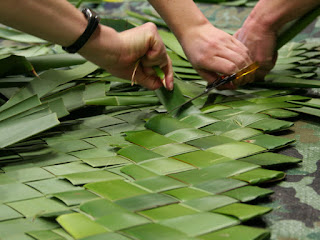
Mahi = work kotahitanga = working together ERO: " Mahi tahi (or mahi ngātahi) describes the unity of a group of people working towards a specific goal or on a specific task, often in a hands-on fashion.   In the school context, mahi tahi describes the business of working together collaboratively in the pursuit of learner-centred education goals. ....." At Tamaki College, staff are working together to raise student achievement in NCEA. I am on the Change Committee which meets every few weeks. We are a group of innovative educators who try to find different ways of approaching the challenge. We discuss and work on this sitting around the table eating brain food and then take it back to our respective PLuG groups for the group to share strategies and ways of working that have helped reach the achievement goals for priority students. It seems to be working because the list of priority students has become shorter as students go from no credits (red) to some credits (gree...

High Expectation Teachers

Image
Ensuring all students achieve success Last Night I attended a lecture by Christine Rubie Davis on High Expectation Teachers. She was talking about her findings from a recent research project. What I took from this talk was that high expectation teachers: use flexible student grouping (according to activity) and a variety of learning experiences. Use assessment information to set goals for each student and support the student to achieve them through high expectations. Students have autonomy over their learning through setting goals and selecting activities to work on – for example with " must-do, can-do” options. It is essential that: expectations for each student are appropriate. teachers provide the scaffolding learners need in order to progress (Vygotsky). the impact of teaching practice on student learning is monitored in an ongoing way. teachers take action to change their practice if it is not having the desired effect. Low ...

Focus on learning

Image
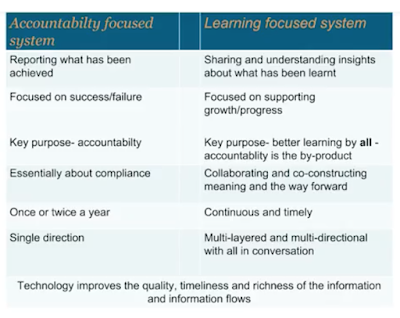
John Hattie, currently co-chairing a Science of Learning Centre ,  stated in an interview that " we need to bring back ‘learning’ as our focus (more than ‘teaching)’.  What does it mean to learn, which learning strategies are optimal (when, how, and where), how do we assess and evaluate how a student learns (wow, we have so many measures of achievement but how many measures of learning do we have!), and how do new advances in the science of learning help make the difference." Yesterday 2 engineering students from University of Auckland spent the day showing students how to work with robots - how to code them, how to test the code on the maze, and how to improve the code so the robot could get through the maze. I observed them working with a Year 10 class. Knowing nothing about using robots in education, I was astonished to see what a difference it made to the students' learning. Instead of working on individual devices they naturally collaborated in groups and when the...